Multiscale Approaches to Sustainable Energy‑Material Development
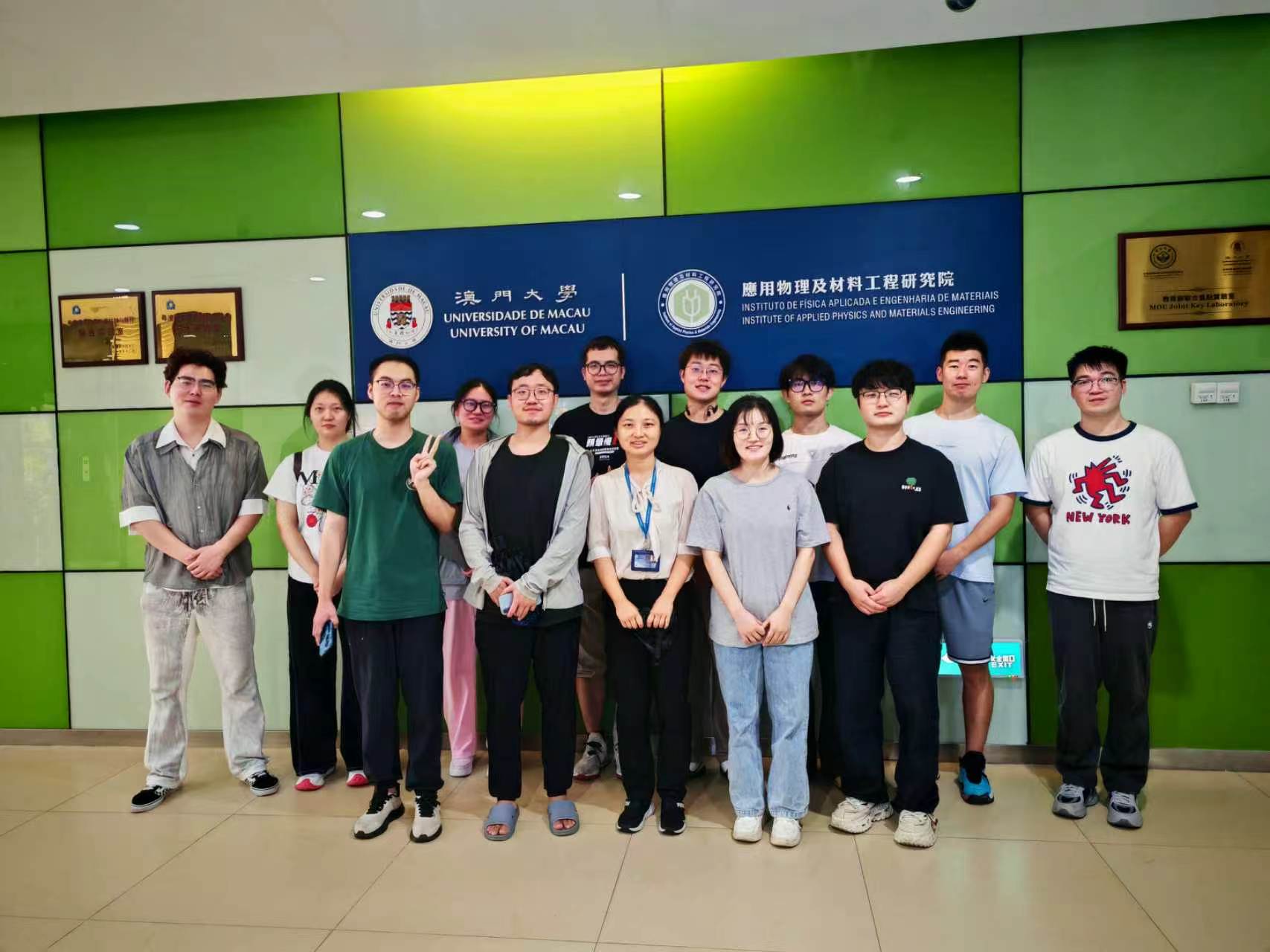
Electrochemical Energy & Sustainable Materials Lab @ University of Macau
About Us

Our group develops advanced materials, interfaces, and electrolyte chemistries for sustainable energy storage and beyond. We combine electrochemistry, materials science, and multiscale characterization to understand ion transport, interfacial reactions, and degradation mechanisms, then translate these insights into practical battery systems. Our research spans aqueous zinc batteries, redox flow batteries, lithium-ion battery materials and prelithiation, operando and in situ diagnostics, and sustainability-driven directions including biomass upcycling, atmospheric water harvesting, and AI-guided materials discovery. By connecting molecular-scale chemistry with cell-level engineering, we aim to create safer, longer-lasting, higher-energy, and more sustainable energy technologies.
Research
Aqueous Zinc Batteries
Electrolyte engineering, separator design, Zn-metal interfaces, and practical cell configurations.
Redox Flow Batteries
Solvation regulation and application-driven electrolyte design for stable, efficient flow batteries.
Lithium-Ion Battery Materials
Prelithiation chemistry, diagnostic strategies, degradation analysis, and practical cell solutions.
Sustainability & AI
Atmospheric water harvesting, waste upcycling, and AI-guided electrochemical research.
Our Team



Qing Li
Assistant Professor & PhD Supervisor
Institute of Applied Physics and Materials Engineering, University of Macau
Dr. Qing Li leads research in advanced electrochemical energy storage, with particular interests in aqueous zinc batteries, electrolyte engineering, interfacial chemistry, and battery materials.
She has over two years of industrial R&D experience in battery technologies, connecting fundamental research with practical applications. Her projects are supported by the National Natural Science Foundation of China, the University of Macau, and industrial partners.
She has published over 80 peer-reviewed papers in journals including Nature Communications, Science Advances, Joule, Angewandte Chemie International Edition, and Advanced Materials.
Members

Jinhua Guo
Postdoctoral Researcher
Redox flow batteries; 8 first-author papers and 8 invention patent applications.

Zhenjing Jiang
Postdoctoral Researcher
MOF structural design for aqueous zinc-ion batteries; 10 first- or co-first-author papers and 2 patent applications.

Zhaoxin Li
Ph.D. Student
Zinc-halogen flow batteries, aqueous zinc-ion batteries, and metal-chelate flow batteries; 4 first-author papers and 1 patent application.

Zhenyu Jiang
Ph.D. Student
Lithium-compensation materials, interface regulation, and mechanisms for long-life lithium iron phosphate batteries.

Shuchang Liu
Ph.D. Student
Battery interfacial evolution and high-performance alkali-metal batteries; first-author paper in Advanced Energy Materials.

Zhiyuan Xia
Ph.D. Student
Materials computation and AI4S; enjoys fitness, badminton, outdoor activities, and fishing and hunting.

Longjun Chang
Ph.D. Student
Renewable biomass resources for energy storage, including cellulose-based separators for aqueous zinc batteries.

Zhaoyang Zhang
Ph.D. Student
Advanced functional materials and technologies for sustainable water resources; 2 patent applications.

Yuhua Fu
Master's Student
Zinc battery energy-storage materials, focusing on low-temperature-adapted electrolytes.

Junqiang Wang
Master's Student
Joined in September 2025; B.S. in Chemical Engineering and Technology, Huaibei Normal University; Excellent Graduation Scholarship recipient (2024).

Bo Zhu
Master's Student
Joined in September 2025; B.S., Beijing Institute of Petrochemical Technology (2023).

Wenbo Liang
Master's Student
Aqueous zinc-bromine energy-storage batteries, electrolyte regulation, bromine conversion, and shuttle suppression.
Biao Hu
Research Assistant
Surface engineering, solid-state electrolytes, and materials computation; 4 first- or second-author papers and 1 patent application.